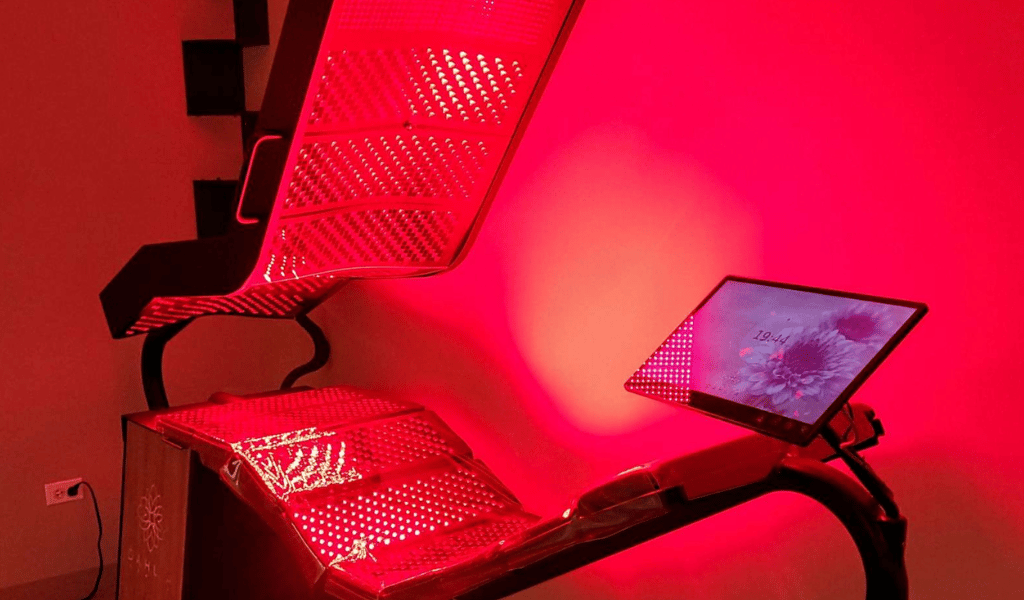
Walk into almost any wellness clinic, dermatology office, or high-performance athletic training center today, and you are likely to find one thing in common: red light therapy. What was once a niche treatment confined to research labs and specialized dermatology practices has rapidly expanded into gyms, spas, chiropractic offices, and living rooms across the country and the trend is accelerating.
At Quest Chiropractic & Acupuncture in Itasca, Illinois, we have been offering Infrared & Red Light Therapy as part of our comprehensive, patient-centered wellness approach. We have watched firsthand as this powerful, non-invasive therapy has transformed the health and daily lives of our patients from reduced chronic pain and faster injury recovery to more energy and visibly improved skin. In this blog, we pull back the curtain on what the science actually says, who benefits most, and why red light therapy is quickly becoming the cornerstone of modern wellness.
What Is Red Light Therapy? A Science-First Explanation
Red light therapy (RLT) also known as photobiomodulation (PBM) or low-level laser therapy (LLLT) uses specific wavelengths of red and near-infrared light to stimulate biological activity at the cellular level. Unlike ultraviolet (UV) rays, which damage skin and DNA, red and near-infrared light are non-ionizing and non-damaging. They penetrate the skin safely and interact directly with the mitochondria, the powerhouse of your cells.
The clinically relevant wavelength ranges are:
- Red light: 600-700 nm targets surface-level skin tissue and shallow structures
- Near-infrared (NIR): 800-1,000 nm penetrates deeper into muscles, joints, and nerves
When these wavelengths reach the mitochondria, they interact with an enzyme called cytochrome c oxidase, temporarily boosting production of ATP (adenosine triphosphate), the molecule that powers every cellular repair and regeneration process in the body. The result: cells operate more efficiently, heal faster, and function better.
The National Library of Medicine officially recognized ‘photobiomodulation’ as a Medical Subject Heading term in 2015, signaling growing scientific legitimacy. Since then, thousands of peer-reviewed studies have validated its mechanisms and clinical applications across a remarkable range of conditions.
From NASA Labs to Your Chiropractic Clinic: A Brief History
The story of red light therapy is older and more scientifically grounded than most people realize. In the 1960s, a Hungarian scientist investigating whether low-level red light caused skin cancer in mice made a surprising accidental discovery: the mice grew more hair. This launched decades of research into light’s biological effects.
In the 1980s, NASA scientists experimenting with red LEDs to grow plants in space noticed something unexpected: small wounds and cuts on their hands healed unusually quickly under the lights. This observation propelled the technology from space research into hospitals, sports injury medicine programs, and eventually mainstream wellness.
Before the beauty industry took notice, dermatologists were already using red light clinically in photodynamic therapy applying it alongside topical agents to treat precancerous skin conditions. That established clinical foundation is what separates red light therapy from many wellness fads: it has a real scientific history, not just social media momentum.
The Evidence-Based Benefits of Red Light Therapy
Here is what the research consistently shows across multiple clinical domains:
1. Skin Health, Collagen, and Anti-Aging
Red light penetrates the skin at shallow depths and has been shown to boost collagen production, reduce the appearance of fine lines and wrinkles, improve skin elasticity, and reduce inflammation that contributes to acne and redness. A key mechanism is vasodilation the widening of blood vessels which increases blood flow and delivers more nutrients to skin cells.
Blinded clinical trials involving hundreds of participants have documented measurable improvements in skin texture, complexion, and collagen density following consistent red light treatment. The FDA has approved low-level laser therapy for aesthetic use, and many dermatology clinics now integrate it alongside other non-invasive skin treatments. LED face mask searches have grown 34% year-over-year in 2026, reflecting a massive shift in consumer awareness.
Our patient experience: “I found red light therapy has been extremely helpful in relieving my arthritic pain. In addition, my skin has improved visibly. I feel more energized overall and will continue to enjoy the many benefits of this therapy!”
2. Hair Restoration
Hair regrowth is one of the most consistently supported applications of red light therapy, with evidence tracing to those original 1960s mouse studies. The therapy stimulates vasodilation around hair follicles, delivering more oxygen and nutrients to follicle roots. Used consistently over multiple months, red light has been clinically shown to slow and reverse thinning hair in androgenic alopecia (pattern hair loss). In 2025, a major multi-specialist consensus review confirmed this as a validated clinical application.
Important caveat: red light stimulates living but struggling follicles; it cannot regenerate hair from completely dormant or dead follicles.
3. Pain Relief and Inflammation Reduction
This is one of red light therapy’s most powerful and consistent clinical outcomes. The therapy modulates inflammatory responses at the cellular level reducing pro-inflammatory cytokines while promoting release of anti-inflammatory mediators. This dual action helps resolve chronic inflammatory conditions that underlie many painful health problems.
A systematic review published in Pain Research and Management found red and infrared therapy significantly reduced pain and improved physical function in patients with knee osteoarthritis. Additional research documents benefits for:
- Arthritis and joint inflammation
- Fibromyalgia (one study found red light as effective as the analgesic lidocaine)
- Chronic low-back pain with reduced inflammatory markers documented
- Peripheral neuropathy confirmed by a 2025 multi-specialist consensus review
- Post-surgical and post-injury pain
Our patient experience: “Since I received Dr. Meeks’ Infrared/Red Light Therapy I have noticed an increase in my energy levels. I have also noticed an overall feeling of wellness after the treatment. Truly amazing!” — Joe L., Elk Grove Village, IL
4. Wound Healing and Tissue Regeneration
The regenerative properties of infrared light extend to wound and tissue healing. Research demonstrates that exposure enhances cell proliferation, accelerates collagen synthesis, promotes angiogenesis (new blood vessel formation), and reduces healing time. These properties make red light particularly valuable in the early phases of wound healing and following injury or surgery — which is exactly why we integrate it into our Sports Injury Therapy and post-injury rehabilitation programs.
5. Muscle Recovery and Athletic Performance
Athletes are increasingly turning to red light therapy to accelerate recovery after intense training. The therapy stimulates tissue healing at the cellular level, reduces post-exercise muscle soreness, and has been shown to improve return-to-play time following sports injuries. A 2016 pilot study documented reduced recovery time in university athletes; another small controlled trial showed less post-exercise soreness and better performance recovery in volleyball players who received red light therapy compared to controls.
At Quest Chiropractic, we regularly incorporate red light therapy into our Sports Injury Therapy protocols for competitive athletes and active adults who want to recover smarter and perform better.
6. Peripheral Neuropathy and Nerve Health
Peripheral neuropathy the tingling, burning, and numbness that affects millions of people, particularly those with diabetes is one of the strongest evidence-backed applications of red and near-infrared light therapy. The 2025 multi-specialist consensus review specifically confirmed the therapy’s safety and efficacy for peripheral neuropathy. Near-infrared light’s deeper penetration is especially suited to reaching nerve tissues that conventional surface-level treatments cannot access.
At Quest Chiropractic, our Neuropathy Care program combines red and infrared light therapy with other advanced, non-invasive modalities to address both symptoms and root-cause nerve dysfunction. If you are experiencing tingling, numbness, or burning in your feet or hands, ask about our specialized neuropathy evaluation.
7. Cardiovascular Health and Metabolic Support
Emerging evidence points to red and far-infrared light’s ability to support cardiovascular health through improved circulation, vasodilation, and blood pressure regulation. A 2025 peer-reviewed meta-analysis found far-infrared sauna therapy associated with a meaningful reduction in systolic blood pressure and waist circumference. Additional research suggests light therapy may help regulate blood glucose by increasing mitochondrial activity an area of growing interest for patients managing metabolic conditions alongside their chiropractic care.
8. Brain Health and Mood Support
Near-infrared light can penetrate through the scalp and skull — opening the door to direct neurological effects. An open-label study of 11 patients with traumatic brain injury showed improvements in executive function, verbal learning, and memory after transcranial near-infrared sessions, along with better sleep and reduced PTSD symptoms. Research also documents mood improvements and reduced drowsiness following morning NIR exposure during winter months. While large-scale controlled trials are still needed, these findings represent one of the most exciting frontiers in photobiomodulation research.
Why Red Light Therapy Is Having Its Biggest Year Yet in 2026
Red light therapy has moved from fringe to mainstream and several converging factors explain why it is having its biggest moment yet:
- Growing consumer demand for non-drug, non-surgical wellness and recovery solutions
- Rising interest in longevity, biohacking, and proactive cellular health
- Better technology: higher-output panels, multi-wavelength devices, AI-powered smart masks
- Stronger scientific validation from major consensus reviews and peer-reviewed publications
- Integration into chiropractic, sports medicine, dermatology, and functional medicine practices
- Social media amplification LED face mask interest has grown 34% year-over-year
A critical insight from researchers: red light therapy’s effects appear strongest when cells are under metabolic stress during illness, injury, or age-related decline. When cells are functioning optimally, the impact is modest. But for patients dealing with chronic pain, inflammation, injury recovery, or metabolic dysfunction, the cellular environment is exactly the kind where photobiomodulation produces its most meaningful results. This is why patients with real health challenges, not just wellness enthusiasts, are often most impressed by what red light therapy does for them.
The scientific community is also taking stock of a sobering reality: people today spend more time indoors than ever before, and modern energy-efficient artificial lighting has largely eliminated red and near-infrared wavelengths from our indoor environments. Some researchers now believe this light deficiency may have genuine biological consequences — essentially, that our cells are being deprived of wavelengths they have evolved to use for repair and maintenance. Red light therapy may, in part, be filling that evolutionary gap.
At-Home Devices vs. Clinical Red Light Therapy: What You Need to Know
The explosion of consumer red light devices from face masks to full-body panels has democratized access to this therapy. But not all devices deliver clinical results, and understanding the difference protects your investment and your health outcomes.
At-Home Devices: What Works and What to Look For
- Best suited for: skin health, anti-aging, mild acne, and general wellness maintenance
- Look for FDA-registered Class II medical devices with third-party verified irradiance specifications
- Ensure the device emits true therapeutic wavelengths: red (600-700 nm) and/or near-infrared (800-1,000 nm)
- Minimum effective irradiance: 20-30 mW/cm2 at 6-12 inches for skin; 50-100 mW/cm2 for deeper tissue
- Consistency is everything most users report meaningful results within 4-8 weeks of regular use
Clinical Treatment: When to Choose Professional Care
- Professional devices deliver substantially higher irradiance than consumer products
- Precise wavelength calibration ensures light reaches the correct tissue depth for your specific condition
- Treatment protocols are designed by trained professionals and adjusted based on your response
- Combined with complementary therapies (chiropractic, acupuncture, neuropathy care) for synergistic outcomes
- Essential for: chronic pain, neuropathy, sports injuries, post-surgical recovery, and advanced anti-aging
The bottom line: for general wellness and surface skin goals, a quality at-home device can be a worthwhile supplement to your routine. For any significant health condition, pain, neuropathy, injury, or recovery, professional-grade clinical treatment delivers results that consumer devices simply cannot match.
Is Red Light Therapy Right for You?
Red light therapy is broadly safe and well-tolerated but it consistently delivers the most significant results for these groups:
- Chronic pain patients: arthritis, back pain, neck pain, sciatica, fibromyalgia
- Neuropathy patients: tingling, burning, numbness in hands or feet
- Athletes and active adults: muscle recovery, performance optimization, injury rehabilitation
- Aging adults: joint health, skin rejuvenation, energy support, circulation
- Post-injury and post-surgical patients: accelerated healing and tissue repair
- Anyone seeking non-drug, non-surgical health solutions
Red light therapy should not be directed into the eyes. Patients with photosensitive skin conditions or those taking photosensitizing medications should consult their provider before beginning treatment. It is a powerful complement to comprehensive care not a replacement for medical evaluation and treatment.
Your Red Light Therapy Questions Answered
How many sessions will I need?
This depends on your goals and condition. For pain relief and muscle recovery, 4-7 sessions per week of 15-30 minutes is typical. Skin health and anti-aging: 3-5 sessions per week for 10-20 minutes. Hair regrowth: 3 sessions per week sustained over several months. Chronic conditions like neuropathy require consistent treatment over 6-12 weeks for meaningful results.
When will I notice the results?
Most patients notice improvements in energy, pain levels, or skin quality within 2-4 weeks of consistent treatment. Chronic or complex conditions may require 6-12 weeks of regular sessions to achieve full benefit. Consistency is the most important variable in your outcomes.
Is red light therapy safe? Are there side effects?
Red and near-infrared light therapy has an excellent safety profile. It is non-ionizing (does not damage DNA), non-thermal at therapeutic doses, and has no known serious side effects when used correctly. It does not burn or damage skin the way UV light does. The primary precaution is to never direct light into the eyes.
Does red light therapy help neuropathy?
Yes, peripheral neuropathy is one of the most strongly evidence-supported applications of red and near-infrared light therapy. A 2025 multi-specialist consensus review confirmed its safety and efficacy for this condition. At Quest Chiropractic, we combine red light therapy with our specialized Neuropathy Care program for comprehensive, non-pharmaceutical results.
Can red light therapy replace my chiropractic care?
No and it works best when it does not have to. At Quest Chiropractic, we integrate red light therapy alongside chiropractic adjustments, acupuncture, and other therapies because each modality contributes something the others cannot. Together, they address the root causes of pain and dysfunction for lasting results that no single therapy can achieve alone.
Experience Red Light Therapy at Quest Chiropractic in Itasca, IL
If you have been living with chronic pain, slow injury recovery, neuropathy symptoms, or are simply ready to take your wellness to a new level, red light therapy at Quest Chiropractic & Acupuncture could be the missing piece.
Dr. Eldon Meeks and our team have over two decades of experience delivering expert, personalized chiropractic and integrative wellness care to patients across Itasca, Elk Grove Village, and the surrounding Illinois communities. Every treatment plan we design is tailored to your unique body, goals, and health history because your care should be as individual as you are.